CONTESTING UNCONSENTED USE OF PHOTOGRAPH IN KENYA
Personality Rights, Filing Complaints and photographs
CONTESTING UNCONSENTED USE OF PHOTOGRAPH IN KENYA
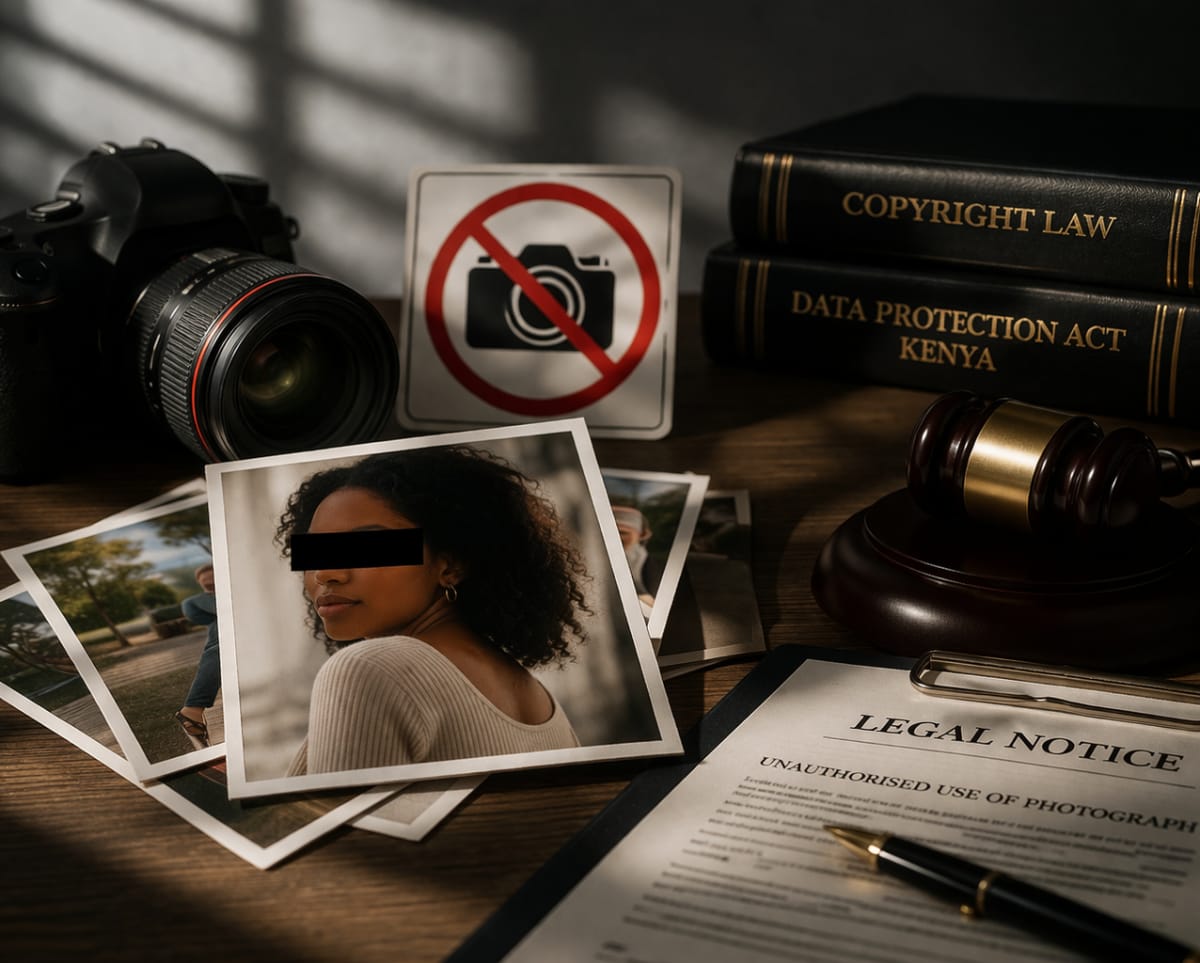
In an age where a single photograph can travel across platforms in seconds, questions of consent, ownership, and control over personal image have become more urgent than ever. In Kenya, commercial or exploitative use of someone’s photograph is checked against constitutional provisions, data protection laws, and intellectual property principles.
More often than not, a photograph will be attributed to an identified or identifiable natural person hence it squarely falls within the purview of ‘personal data’. Further, it is needless to state that personal data should be processed lawfully and in accordance with the right to privacy of a data subject. This is because as a matter of right, a data subject should be informed of the use to which their personal data is to be put. Importantly, the data subject needs to consent to the processing of their image/photograph for one or more specified purposes.
Personality Rights, and photographs
Personality right, can be described as an individual’s right to control the commercial use of their name, image, likeness, or other unequivocal aspect of their identity. Typically, personality rights consist of two types of rights:-
i. The right of publicity- This right keeps one's image and likeness from being commercially exploited without authorization or contractual compensation (similar to the use of a trademark); and
ii. The right to privacy- Usually, this is the right to be left alone and not have one's personality represented publicly without permission.
Particularly, publicity rights fall into the realm of the tort of misappropriation of personality and passing off. A photograph constitutes one of the chief attributes of someone’s personality for the obvious reason; it reveals the person’s unique features and secerns them from their peers. Accordingly, protection of one’s image presupposes the individual’s right to control the use of that image or commercialization of the same, including refusal to publication of the image thereof due to image rights.
Right to Privacy/Identity
To successfully contest unconsented use of your photograph, you need to demonstrate breach of the right to privacy. As to breach of the aforementioned, the Courts have in a plethora of decisions, addressed the same. The Learned Mativo, J. (as he then was) in Jessicar Clarise Wanjiru v Davinci Aesthetics & Reconstruction Centre & 2 others was of the opinion that:
“The right to privacy is guaranteed under Article 31 of the Constitution of Kenya, privacy has been defined as ‘the right of the individual to be protected against intrusion into his personal life or affairs, or those of his family, by direct physical means or by publication of information….The right to privacy consists essentially in the right to live one’s life with minimum interference. It concerns private family and home life, physical and moral integrity, honour and reputation, avoidance of being placed in a false light, non-revelation of irrelevant and embarrassing facts, unauthorized publication of private photographs, protection from disclosure of information give or received by the individual confidentially.”
In the above sense, publication of private photographs constitutes intrusion of personal life and may be a ground for an action for breach of privacy. Moreover, the right to privacy should be protected so as to enable an individual lead an autonomous, independent life and enjoyable mental happiness. Relying on a Canadian case of Krouse v. Chrysler Canada and with the use of someone’s image being a tort falling under misappropriation of personality, the following elements need to be met:-
i. There need to be commercial exploitation of a person’s personality;
ii. The person is clearly identifiable in the medium used and to their respective community or communities;
iii. The person does not consent to the use of their personality; and
iv. Damages, either emotional or financial losses, are proven (although recent judicial rulings would indicate the right of privacy is recognized even in the absence of damages).
How to file a complaint as regards unconsented use of a photograph in Kenya
You need to issue a Cease-and-Desist letter and try to settle the issue out of Court. Where the letter is ignored or the demands therein are not met, you can escalate the matter to the Office of the Data Protection Commissioner. The complain is lodged via Form DPC 1 whereupon, the Data Commissioner investigates the matter and prepares a determination. Appeals are preferred to the High Court.
Whenever your image is used without your consent, do not panic. A swift legal intervention can make all the difference. Musa & Musa Advocates boasts the best and the most experienced data protection lawyers with a deep understanding of Kenya’s privacy and media law landscape. With surgical precision, we are always ready to respond whenever your privacy is at stake. Contact us today to safeguard your rights and take a decisive action.